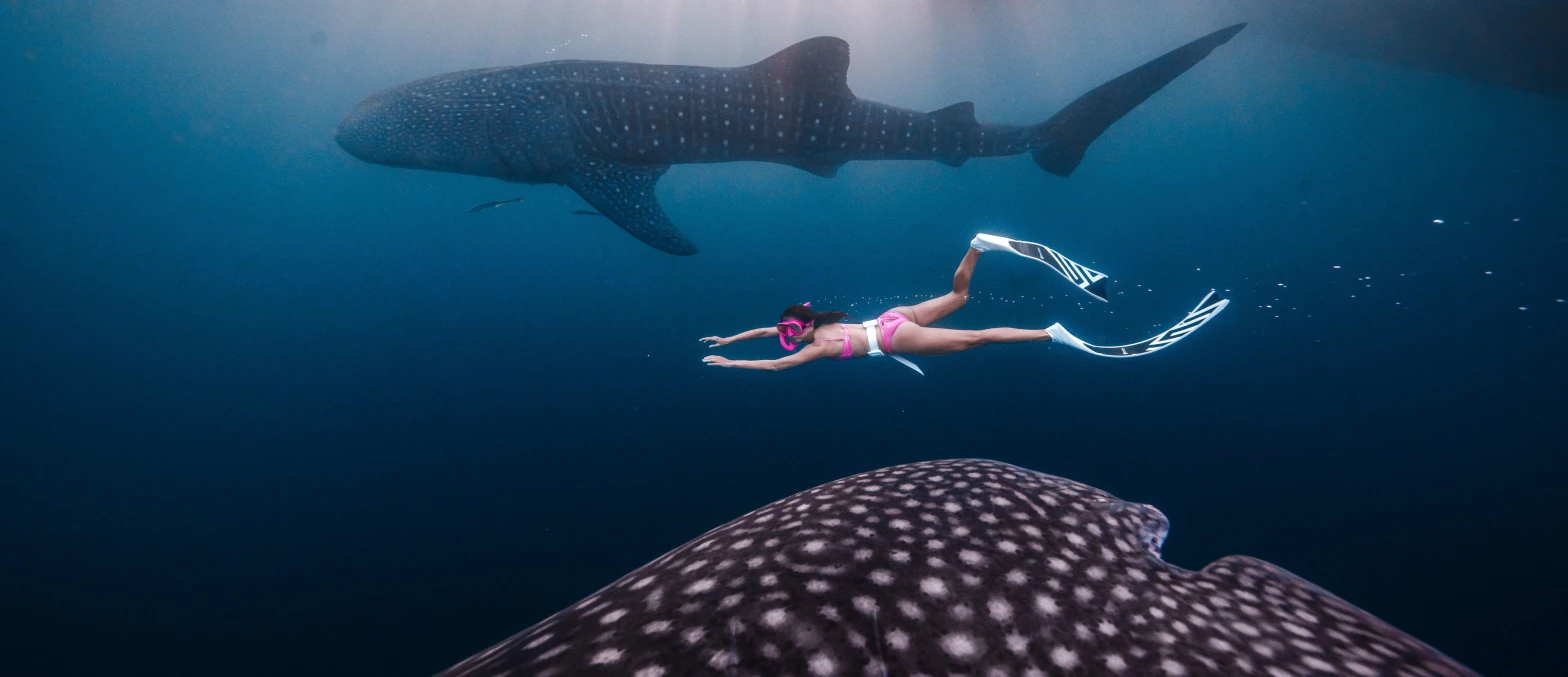
The first time I swam beside a whale shark, I felt something shift—not just in the water, but in the way I see the world. There I was, floating in the open ocean near Sumbawa, the sun flickering on the surface, when a shadow started to form below.
It wasn’t menacing. It was slow. Calm. Enormous.
And then it emerged—a gentle, spotted giant drifting just meters from where I floated, its tail slowly sweeping side to side like it was painting the water. For a few breathless moments, we existed in the same space, under the same sun, with no sound except the rhythm of the sea.
That moment wasn’t just awe-inspiring. It was grounding.
There’s something about the presence of whale sharks that humbles you in the best way. It quiets the noise in your mind. It pulls you out of distraction and into pure awareness. It reminds you that nature isn’t just something to observe—it’s something we’re a part of.
And maybe that’s what the whale sharks of Saleh Bay really offer—not just a rare wildlife encounter, but a rare human reconnection.
The Gentle Giants with a Powerful Impact
Let’s start with what makes whale sharks so captivating.
Despite their massive size—growing up to 12 meters long—whale sharks are slow, graceful filter feeders. They’re not predators. They’re not aggressive. In fact, they’re among the most docile species you could ever encounter in the wild.
But it’s not just their size that leaves an impression. It’s their presence.
Swimming alongside one feels almost dreamlike. They move with a kind of patience that’s rare in the fast-moving world above water. They remind us what it means to slow down. To observe. To respect space and silence.
That’s a kind of wisdom we need more of—especially in the way we treat nature.
Nature, When It Feels Personal
Most people grow up hearing about the environment in abstract terms: conservation, climate change, biodiversity. It can feel far away. Technical. Distant.
But something shifts when you look into the eye of a whale shark, when you move in rhythm with it, when you feel the weight of the ocean around you. Suddenly, nature isn’t a headline—it’s a heartbeat.
That emotional shift is what inspires real change.
The more people meet whale sharks in the wild, the more they start caring—not just about the animals, but about the ocean as a whole. Coral reefs. Plastic waste. Overfishing. Sunscreen toxins. It all becomes real when you’ve shared a moment with something that depends on that ecosystem to survive.
The Whale Sharks of Saleh Bay: A Special Connection
What makes Sumbawa’s Saleh Bay so special is that it offers these moments without rushing them. The area remains relatively quiet compared to more commercialized destinations. There’s a rhythm to it—a kind of mutual respect between humans and sea life.
Local fishermen have known about the whale sharks for years. These animals are drawn to the bagan (traditional fishing platforms) during certain seasons, creating opportunities for responsible, respectful marine encounters that feel deeply human.
When you join a Saleh Bay whale shark tour, you’re not just seeing nature. You’re entering into it, slowly, gently, humbly. The guides don’t chase. The guests are taught to wait. The sharks come when they want to, and that’s part of the magic.
Because connection doesn’t happen through control. It happens through patience.
What Whale Sharks Teach Us About Being Human
There’s something deeply symbolic about a creature that’s so massive yet completely nonviolent. So powerful yet so peaceful.
It reminds us of the kind of presence we aspire to as humans—strong but kind, curious but calm, influential without dominating.
Being near a whale shark teaches you more than biology. It teaches you emotional clarity. You realize how loud we’ve become, how fast we move, how disconnected we are from the natural world we belong to.
You don’t need to be a marine biologist to feel this. You just need to float beside one for a few minutes and let yourself feel small—in the best way possible.
Why This Connection Matters Now More Than Ever
Let’s face it—we’re living in a time where the gap between humans and nature has never felt wider. Urban life, digital noise, climate stress—it’s easy to feel disconnected.
But when people encounter animals like whale sharks in their natural habitat, something softens. You start making different choices. You pause before buying single-use plastic. You reconsider your sunscreen. You think about what happens to your waste after a beach day.
And you tell your friends. You post. You educate without preaching. That’s how awareness spreads—not from guilt, but from connection.
From Wonder to Responsibility
That’s the real power of these gentle encounters. They begin with wonder, but they end with responsibility.
You walk away from the water with questions.
How can I help protect this?
Who else needs to see this?
What else don’t I understand about the ocean and its rhythms?
The best part is that responsible whale shark tours don’t leave you hanging. In places like Saleh Bay, operators take the time to explain the ecosystem. They talk about migration, feeding habits, threats, and how the community is working together to protect these creatures.
It’s not just a tour—it’s a conversation.
And that makes every encounter richer, deeper, and more personal.
The Role of Storytelling
After my time in Saleh Bay, I found myself telling the story over and over again. Not just the part about the whale shark, but the quiet. The way the sun hit the surface. The moment the shark turned slightly toward me. The way the guide waited before entering the water.
These aren’t dramatic details. But they’re meaningful.
Sharing these stories is part of the connection too. It’s how we extend that moment in the water to people who may never get the chance to go themselves. It’s how we remind each other that beauty still exists—and that it’s worth protecting.
Connection Is the Gateway to Conservation
People protect what they love. And they love what they’ve connected with.
Whale sharks are more than just rare creatures. They’re ocean ambassadors. Living, moving reminders of what the sea still holds, and what we stand to lose if we’re not careful.
Whether you’re a diver, a snorkeler, or just someone who dreams of the ocean from a city apartment, know this: the bond is still there. It’s waiting for you. You don’t need to be an expert. You just need to show up with humility.
And if you’re lucky enough to meet the whale sharks of Saleh Bay, let them teach you. Not just about marine life, but about your own rhythm. Your own silence. Your own connection to the wild world around you.
Because that’s what the ocean offers—not a spectacle, but a relationship.
And every now and then, a whale shark to remind us how beautiful that relationship can be.